PROCEDURES @ SCHIPHOL

[wings]

click on graphic to enlarge, click on text to link through
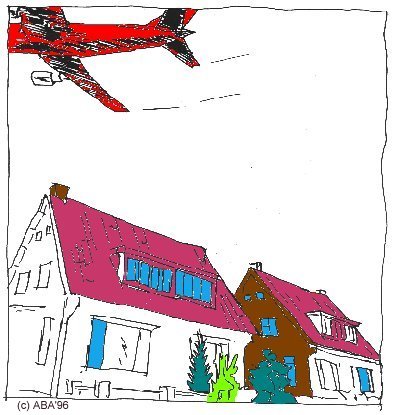
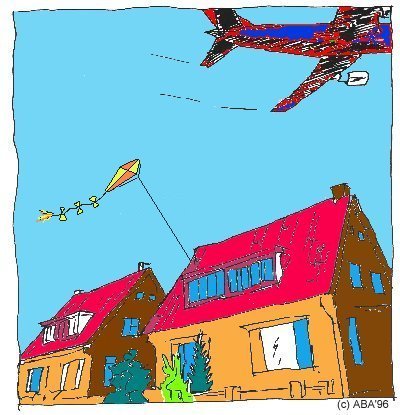
Nettlewood: 'Why fly landing aircraft from the South so often over the centre of Amsterdam?'
Pigeonroof: 'But look at that magnificant technology up there, amazing!'
Nettlewood: 'I've experienced that now already several times.'
Pigeonroof: 'I even don't need my binoculars to recognize the type, it's a B747 400'
Nettlewood: 'It's a shame!'
Pigeonroof: 'Wish I was in there...'
Nettlewood: 'How so, as less as possible over residential neighbourhoods.'
Pigeonroof: 'On my way to Copacabana beach and beyond.'

[The conversation above was inspired by a genuine note dated somewhere by the end of 1999.
This note was written by the former minister of transport Mrs. Netelenbos to one of her chief executives
of the Dutch Civil Aviation Authority. I assumed this dialogue with Mr. Duyvendak, who was then
the representative of a group of fanatic environmental protection activists (founders of the Bulderbos
to prevent the development of the so called 5th runway) in the neighbourhood of Schiphol Airport.]

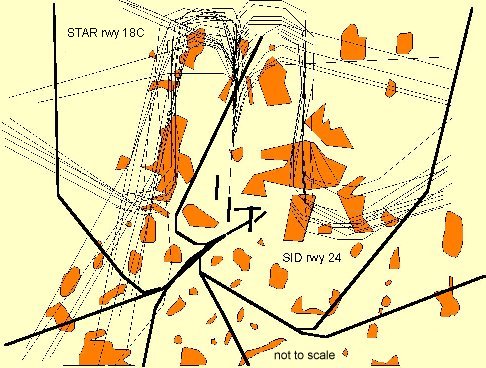
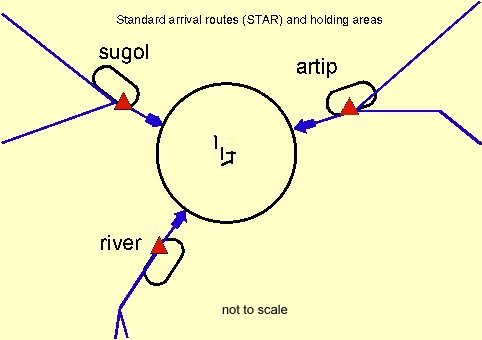
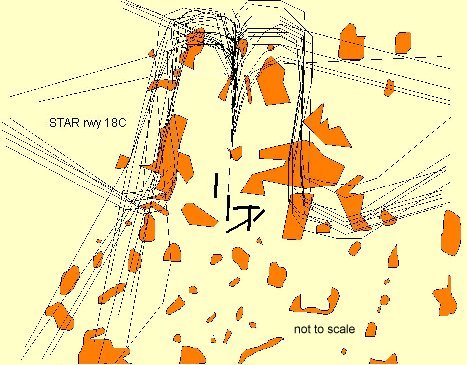
Inbound aircraft from all directions follow a defined Standard Arrival Route (STAR) to a holding fix. If the flow of traffic is exceeding the capacity of the airport or if due to bad weather conditions a greater distance is required between aircraft following eachother in a landing sequence then the pilot gets instructions to join the [hold] holding (RIVER, SUGOL, or ARTIP) and to wait for her/his turn to continue the approach.
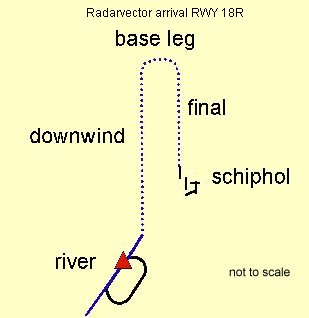
But normally long before reaching that point the pilot is cleared to the radiobeacon SPL. Somewhere in between the holding fix and the clearance limit SPL the radar controller takes over the navigation of the aircraft by giving the pilot instructions like speed adjustments and headings to steer. With these so called radar vectors [vectors] the aircraft is efficiently guided to a point where the pilot is able to commence the last part of the approach while intercepting signals from the instrument landing system. Prognoses indicate that Schiphol is growing rapidly [star] busier and bigger. Politicians currently juggle with decisions on noise regulations in the same manner as aircraft depart and arrive: depending on winddirection.
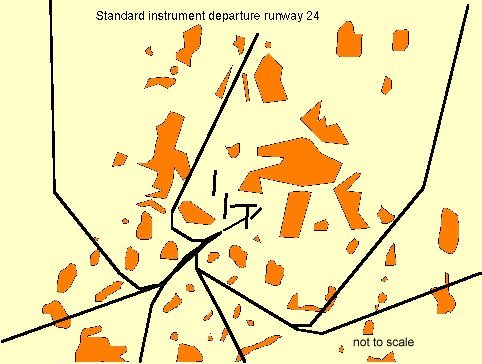
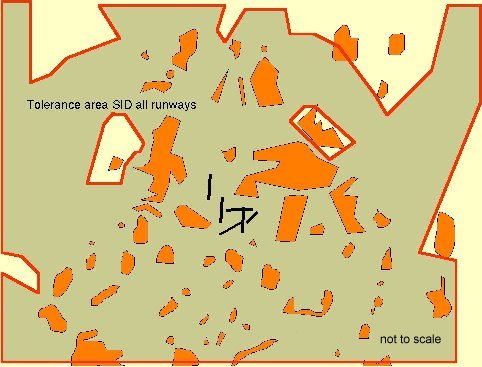
Schiphol has (February 2003) five main runways and a smaller secondary one. That's 12 directions to land and take off. A rather complex system is used to determine the best noise preferential combination of runways. Aircraft also leave in several [sid] directions from Schiphol. They follow a Standard Instrument Departure (SID). Generally a take off and climb out cause more noise than arriving aircraft. [tolerance]
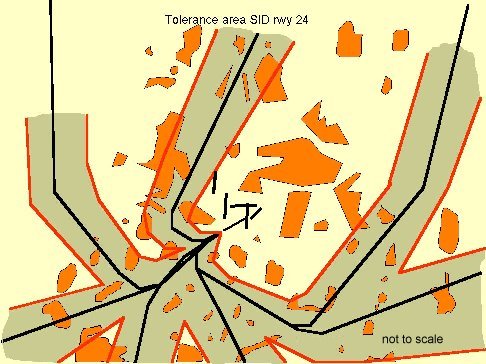
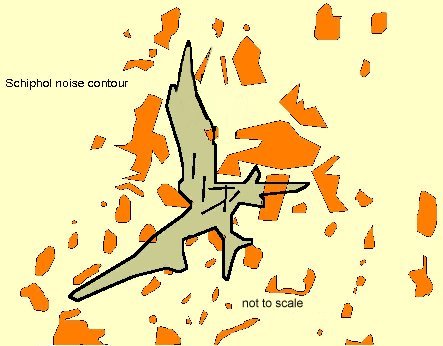
It is quite clear that as long as aviation takes place, and this applies for railroads as well as for road traffic, people will have to deal with noise, pollution and risks. Some more and some less, that depends on where you live and the degree of your very individual level of tolerance. Of course all kind of noise abatement procedures are invented as to reduce the inconvenience for the environment as much as praticable. Anyhow, with the graphics on this page you might as well get an impression of how the situation looks like for Schiphol and its vicinity.
[rozenburg] [sidstar] [allnoise] [contour] [acft&kite]
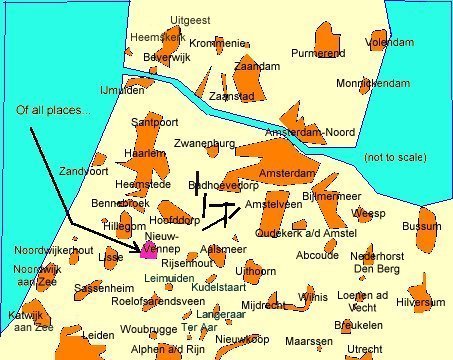
And the big question at the end is: 'Where do I live?'
[towns]

[wings]
Allow some time to get this instrument approach presentation on your screen.


[logo] [logo]

[abaware] [a t c] [s*a*f*e*] [doodle] [maslow] [nihilism] [hedonism]
[@ spl] [ulrika j.] [personal] [creature] [comics] [abart] [pages]
[disclaimer]

[back] [top]